.png)
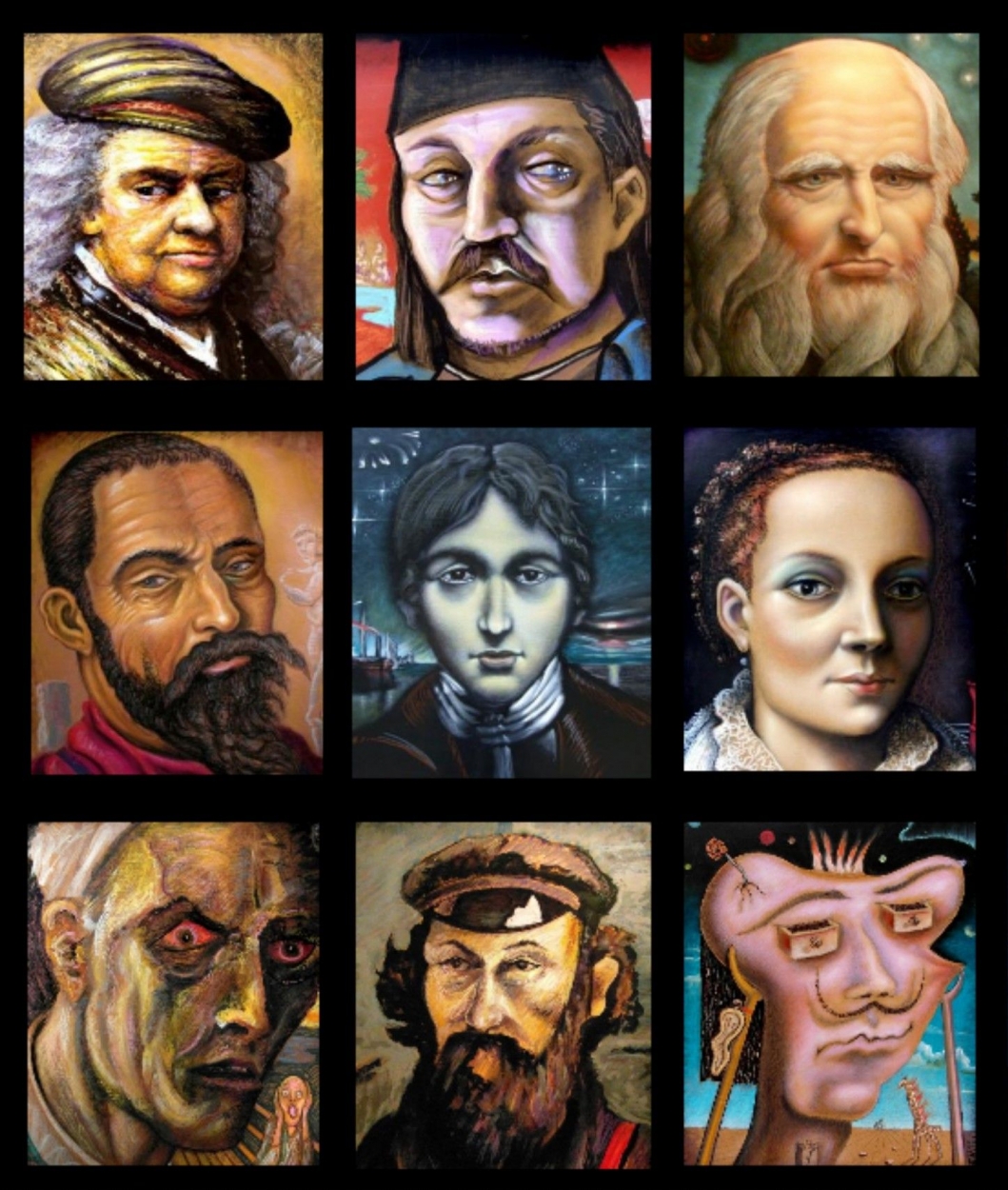
The following are examples of images completed in 2012 as a homage to immortal artists of the past.
In the words of the artist:
I have chosen to approximate my subjects too, painted mainly in their own styles with a leitmotif from their most iconic images. From that process, I have learned much - about art, and where it has been, and where it is going. What I have tried to give to each of these expressionistic portraits is a feeling in their eyes, to convey the passion, devotion, and obsession which they all possessed within their own unique vision. I attempt to evoke the spirit of these eighteen immortals, and to convey what was on their minds when they invented their star contributions to Art and Life…
The concept for this series began with someone, a genius, who was not a painter or sculptor, but a wordsmith – a poet and playwright, who was most likely not who he pretended to be.
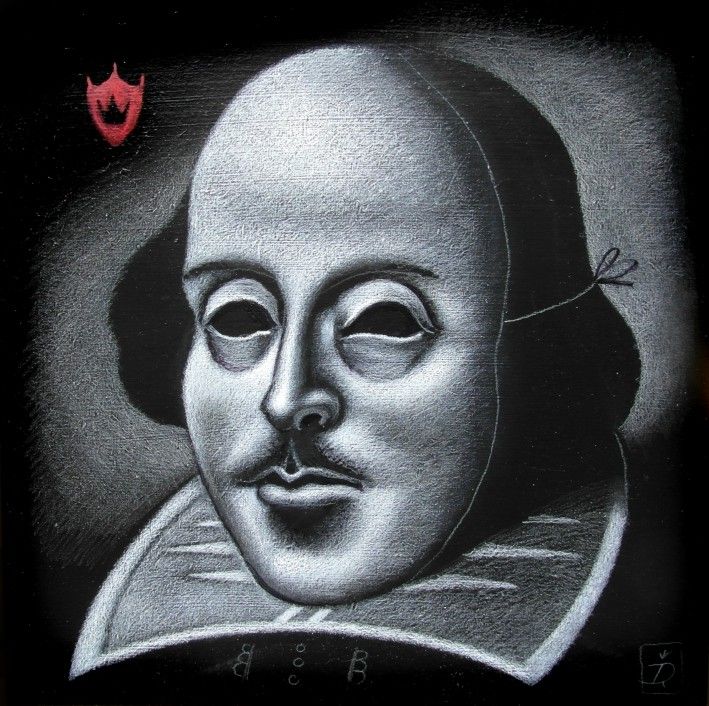
THE DE VERE SHAKESPEARE
Mask of the Impostor
From Sigmund Freud to Mark Twain, John Adams to Charlie Chaplin – none of them (and a host of others) believed that William Shakespeare was the true author of the poems and plays attributed to him. What is the evidence that William Shakespeare was NOT the real Shakespeare?
Only the judgement of the intelligent mind – which knows with noetic sureness that a trifling commoner with the historically recorded uncouth attributes of the glove-maker and butcher from Stratford on Avon could have created the most noble literature, the most holy of holies in the English language.
Never mind that he neglected to teach his own children to read and write, ignore the fact that he left behind not one book in his last Will and Testament, not even a Bible. Consider only this; his own writing skills evidenced in his surviving signatures were for all purposes, practically illegible.
Shakespeare the minor actor and theatre manager was obviously a ‘beard’, a mask meant to cover the true identity of the author, a nobleman and the natural son of Elizabeth I – the earl of Oxford, Edward de Vere.
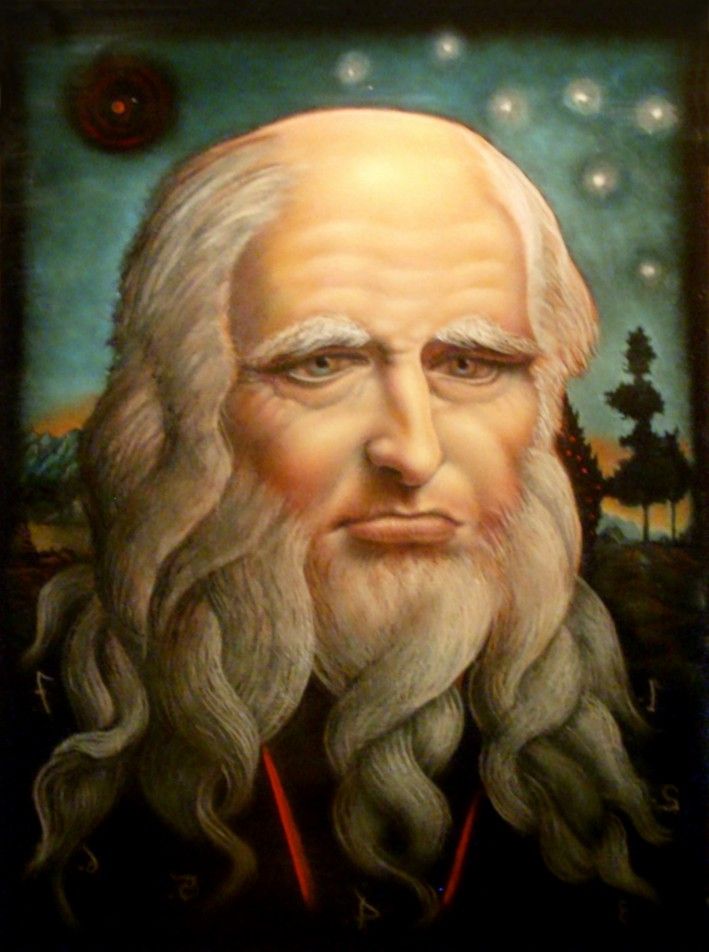
SECRET SOUL
The Real Da Vinci Code
Leonardo was obsessed with his own curiosity. He delved privately into the explorations of a polymath, and kept his researches largely to himself. He was widely celebrated in his own lifetime and honoured for his incredible ability to work a piece to a high degree of finish, which ironically, he only rarely did. Was he seeking perfection- or did he realise that such a level could never be attained? Beckett’s famous line that ‘…great art fails’ suits Leonardo to a ‘T’.
In his voluminous notebooks, written in hidden ciphers, Leonardo asks again and again one phrase which defines the man – and few, if any scholars have appreciated this fact. He wrote in the margins of his many codex’s these words:
‘Tell me if anything ever was done?’
In his most iconic work, the ‘Mona Lisa’, we should understand what he meant. It was not ‘Tell me if anything ever was done? or ‘Tell me if anything ever was done’. Rather it was surely – ‘Tell me if anything ever was DONE?’
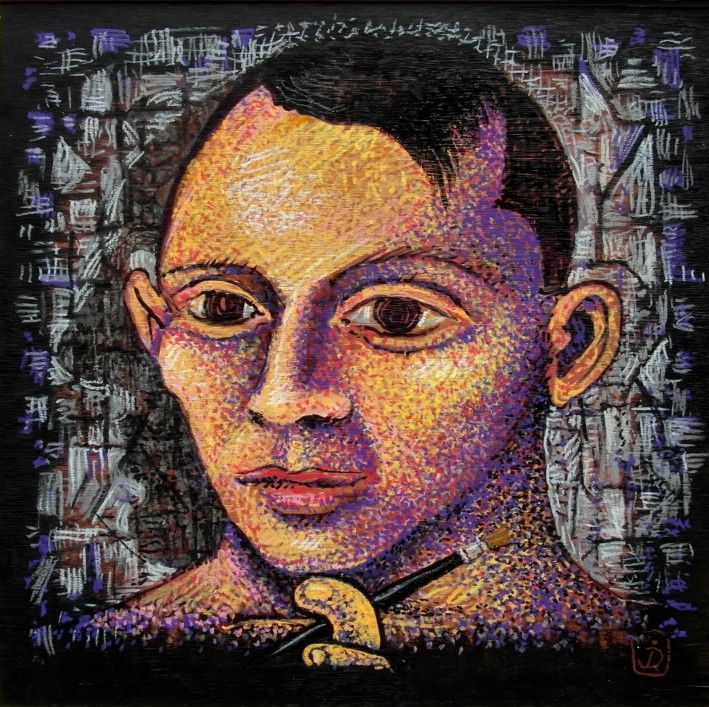
THE BOXER
Inside the Arena of the Mind
This play upon an early self portrait by Picasso works on many intellectual levels, particularly when the title and sub-title are carefully dissected and applied. Even that is not enough for there is a duality there also, a dichotomy, for ‘The Boxer’ may be considered as being lifted from one of Picasso’s most potently quotable statements:
‘Do you think that a boxer is just his muscles?!
He goes on to observe that he does not make art for people to hang over their sofas and that he uses art as an offensive and defensive weapon against the world.
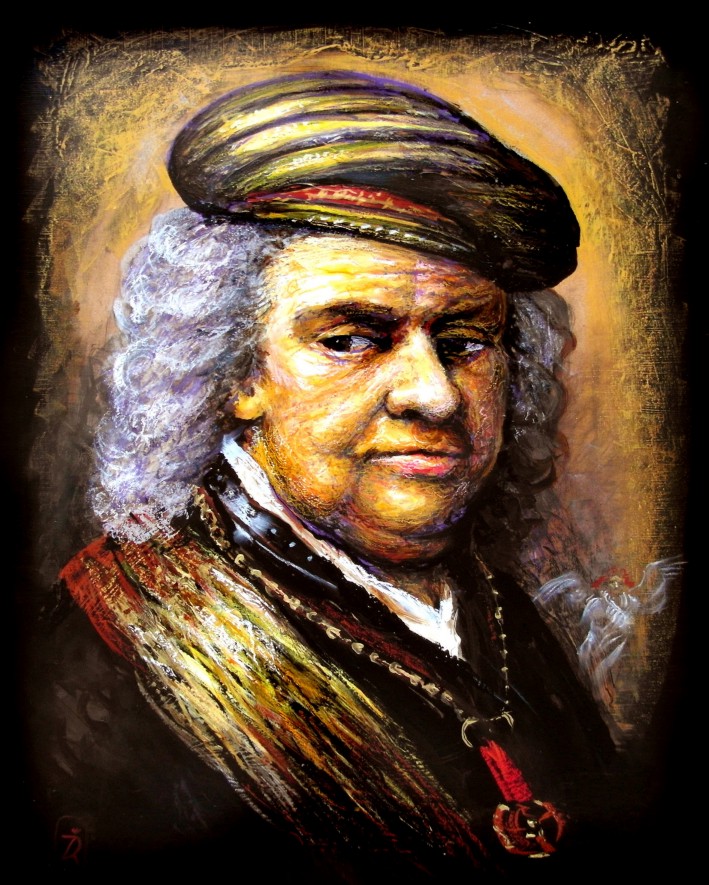
APOTHEOSIS
Facing the Mirror
A famous artist once observed that when he looked at a Franz Hals he wanted to start to paint, but when he looked a Rembrandt, he wanted to give up painting.
There is something about Rembrandt’s skill that sets him apart. His early career was star studded. His popularity brought many lucrative commissions and he enjoyed great financial success. Then he painted the famous Night Watch.
It was a tour de force of chiaroscuro which is justly appreciated today, but at the time the company depicted (the Night Watch) were less than pleased that so many of them were hidden in the shadows. It was not appreciated that Rembrandt had created a work of tremendous energy and mystery – instead they wanted a billboard.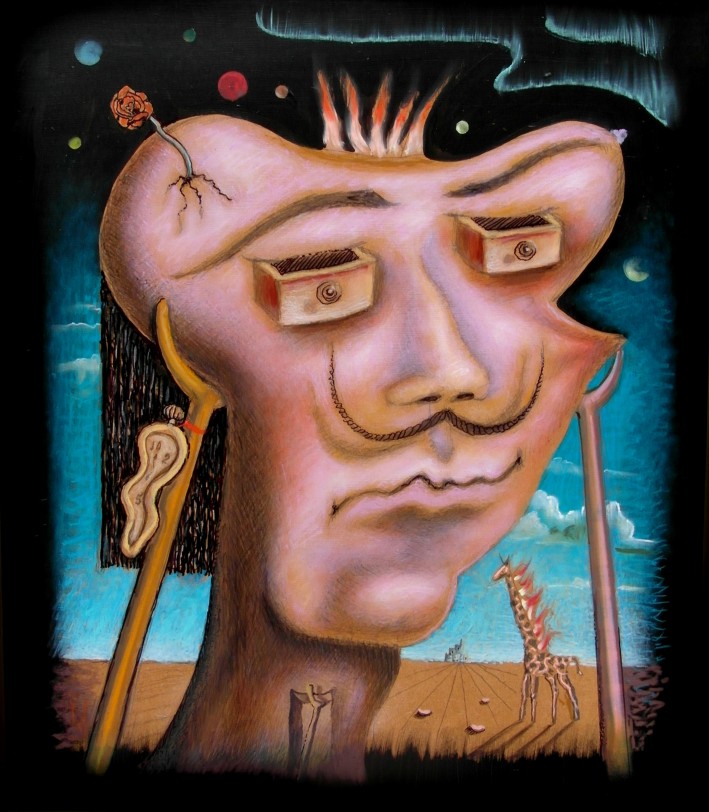
THE MAD MAN WHO KNEW HE WAS NOT MAD
But Happily Pretended that He Was
In the Dalinian world all excesses are never enough. Disconcertingly confident he combined his skill at depiction with his inner vision of the sub molecular constructs of truth.
Some think he was a genius of the human psyche. Others saw him as an exhibitionist and an entrepren-whore, which he never denied. Others cited his delusions of paranoiac grandeur as a flaw – which he only used to his advantage. In short he was shockingly talented, genuinely neurotic but using the anxiety to his advantage as he delved into his role as a pioneer in the post Freudian revolution which encouraged his sense of total honesty and unabashed self indulgence.

RAGE
The Insider/Outsider
Few artists have had the passion of Van Gogh. The intense decade of his mature creativity climaxed with his famous incident of self-mutilation. Many think that this event was caused by his involvement with a prostitute (* to whom he did present the said bit of anatomy). No…it was not over a woman. It was over his truly passionate involvement (on a purely intellectual level) with his soul-mate Gauguin, who announced that he was leaving him.
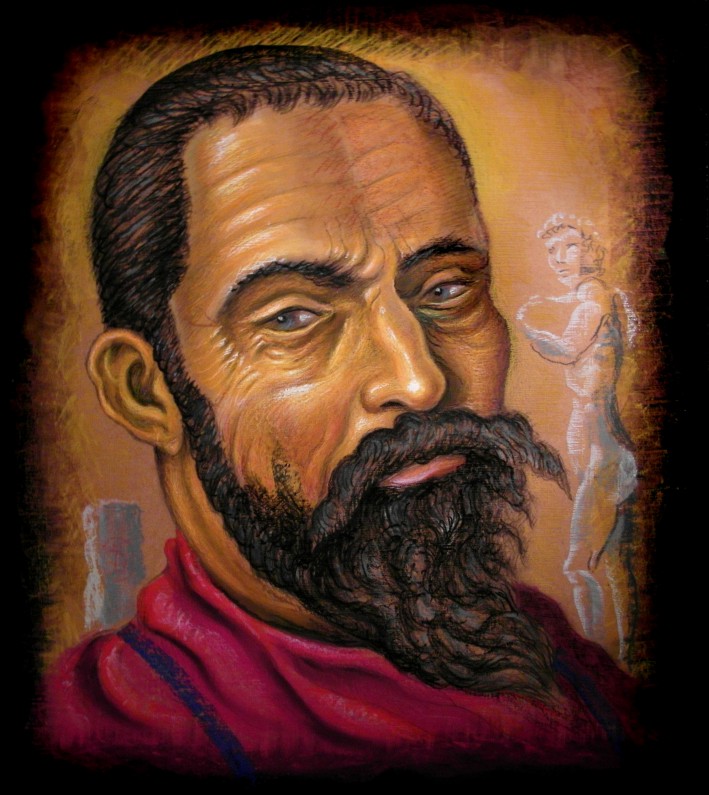
THE MASTER OF THE UN-CARVED BLOCK
Finding the shape within
It is hard for anyone, who has not done it, to appreciate the amount of painstaking effort it takes to carve stone. There is no such thing as a lazy artist. Pain was Michelangelo’s constant companion, and whether cutting and minutely polishing hard stone or painting huge frescos Michelangelo’s career could be accurately summed up in that title applied in the biography of his life – ‘The Agony and the Ecstasy’.
The core secret of Michelangelo was his terribilita – his ‘terrible-ness’, his power to strike terror into the minds of those who were slow to understand him. This fierceness was the fuel he used to create masterworks of unparalleled beauty and perfection – he was truly a monstrous genius.
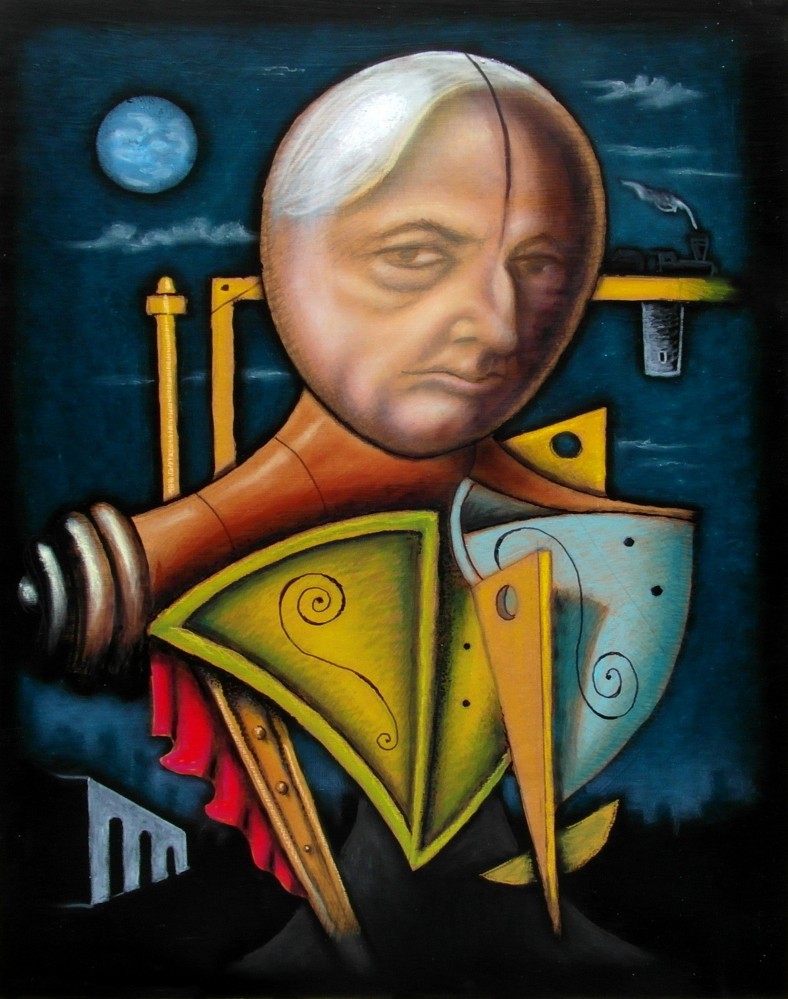
THE METAPHYSICIAN
Pioneer of the Enigma
Few artists have had the impact of de Chirico. This phase of his creativity which was so influential may have been brief but his metaphysical paintings focussed the minds of the nascent surrealist movement. Artists such as Ernst, Magritte, Tanguy and Dali all were moved to explore their own dream imagery by the sight of his early pictures.
De Chirico himself had been an admitted acolyte of Arnold Bocklin, whose mythological fantasies fired his imagination; but perhaps it was Nietzsche and the late autumn sunlight of Turin that turned de Chirico into the grand master of disorientation and the enigma.
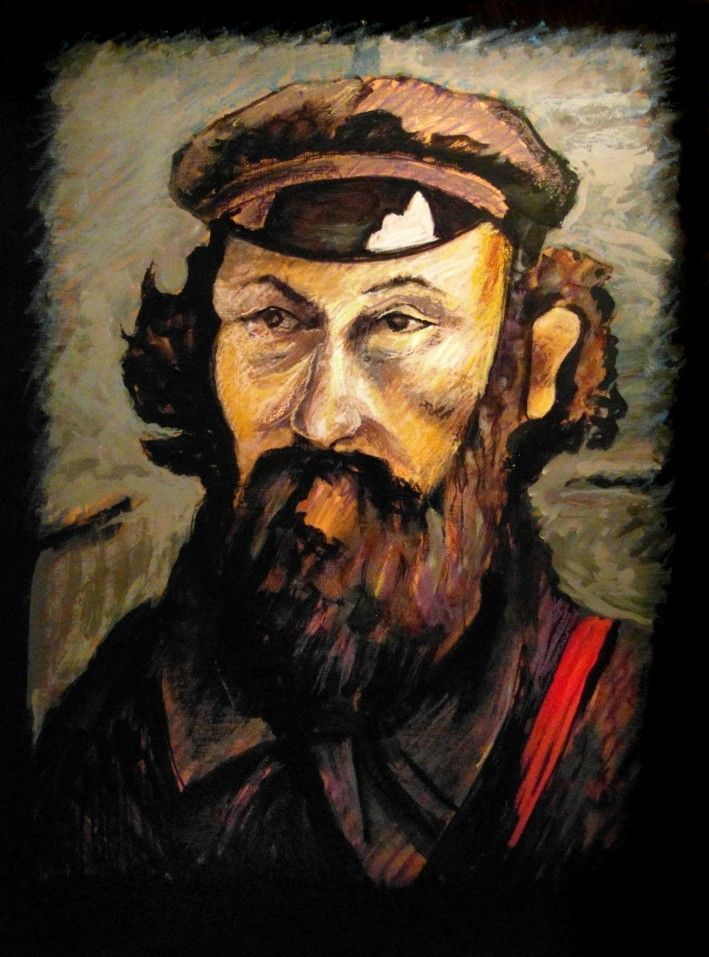
THE RENEGADE
Besieging the Tower of the Enemy
Cezanne was a renegade. He loved to outrage and though from a very wealthy background, dressed like a tramp and stubbornly refused to please or play the game.
He had his own game and he played it to the hilt. Year after year he was rejected by the French Academy, the establishment. Yet year after year he sent them pictures well knowing that they would never be accepted. He even made fun of them by creating things that mocked them.
Cezanne did not paint well in the icy and polished academic style. He was too impulsive, too awkward, too much the contrarian to fit himself in, but he never had those skills anyway. What he had was energy and vision – and these he used to create his own world.
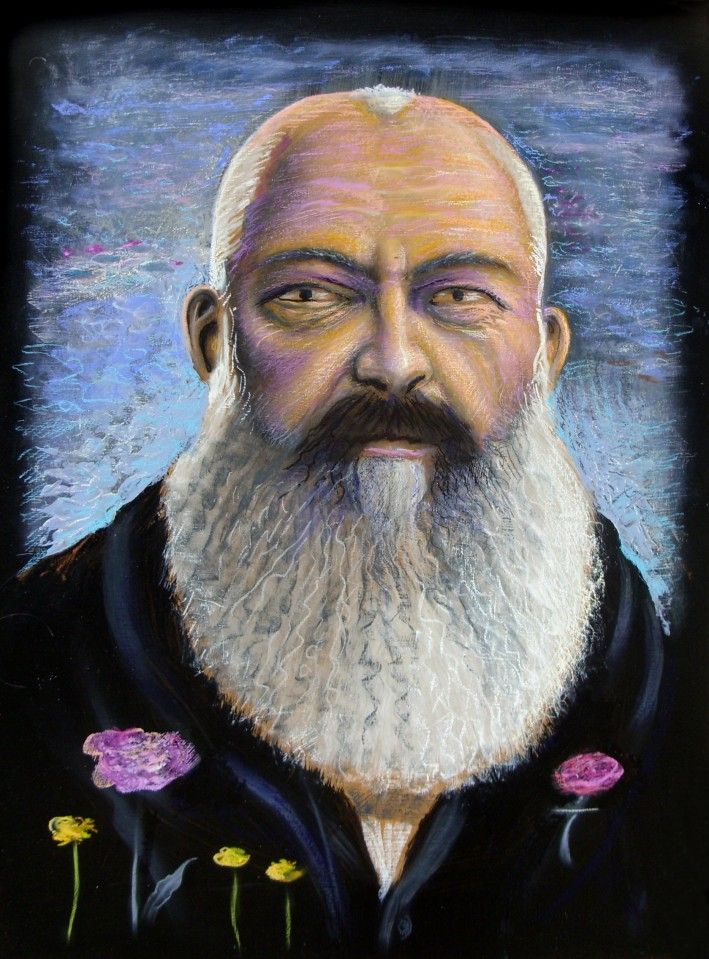
COMPENSATIONS
Not Just an Eye
Carelessness is not the perfectly correct word to use, for many an abstract expressionist has not truly understood Monet because they thought that it was merely that. Perhaps it should be more fulsomely described as detached, unconscious, removed from the realm of total human control and abandoned to the power of the unconscious and the Mysterium Tremendum.
Picasso called him ‘Just and eye…’ though then he added – ‘…But what an eye!’
These images vary in size from 50 x 60 to 60 x 80 cm. They and others are presented in a catalogue, IMAGO, The Immortals. Contact us if you are interested in obtaining a copy.